CitySenZ
CA23145
CitySenZ
CA23145
Architectural and Urban Ambiances of European Cities
Conference Series of Cost Action CA23145
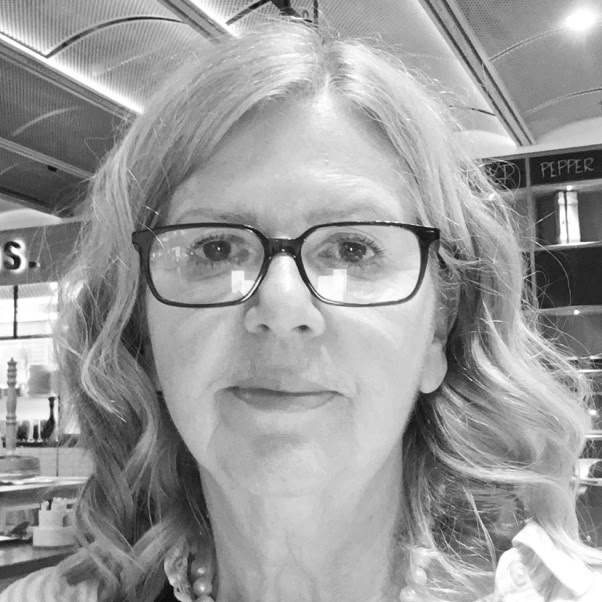
SELMA HARRINGTON
Keynote Speaker
Synchrony-City
Sarajevo and other stories
On the morning of May 7
Sketching the cross-disciplinary discursive prism for understanding an urban context, this presentation focuses on place making of Sarajevo, the capital of Bosnia and Herzegovina, whose urban morphology was shaped by the dramatic historic interchange of continuities and ruptures. Examining literary, architectural, journalistic and historical sources, it maps the historic embodiments and lived experience of the city, which is frequently conceptualised through East–West binary. Inspired by Italo Calvino’s Invisible Cities, occasional city walks and work by contemporary home-grown urban scholars, the presentation explores fragments of the city and its periods which come together or apart, thus adding, subtracting and changing layers of meaning of the physical space. The experience of Sarajevo which expands through the complexity of a post-conflict society is of relevance for many other places under severe pressure of development, political divisions or destruction where urban space becomes a playground for conflicting actions or inertia in which public interest and voices are often under-represented and undermined but sometimes refreshingly innovative and resilient.
Dr Selma Harrington MRIAI HonAIA (Member of the Royal Institute of the Architects of Ireland and Member of the Royal Institute of the Architects of Ireland) is a Co-director of the UIA Education Commission-EDUCOM and a Past-President of the Architects Council of Europe (ACE) and a current Chair WG EU-funded projects. With insights rooted in international practice of architecture, she is a published author and a Member of International Review Panel for academic journals Archnet-IJAR and AAeU. She is an experienced reviewer and expert in a number of EU funded projects dedicated to a multi-level engagement, co-creation and trans-disciplinary collaboration. Championing smaller, accession and candidate countries from the Western Balkans, she has initiated and developed a NEB Forum Bosnia and Herzegovina, which secured a Public Vote Winner Award at NEB Festival 2024 and a grant from the NEB Academy for the training programme “Navigating Sustainability, Conservation & Circularity in the Historic Built Environment”. Her academic interests include 20th century architecture and urbanism, critical and contextual heritage discourse and place making.
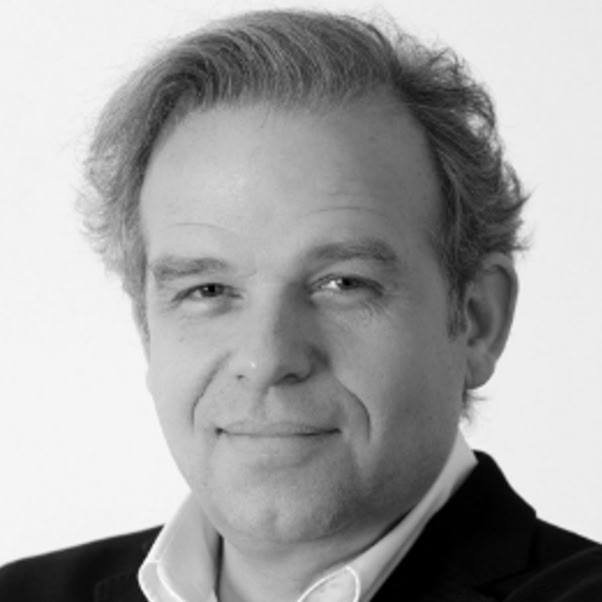
MARC DÖLGER
Keynote Speaker
Co-Creating Atmospheres
How Users Shape the Feel of Place
On the afternoon of May 7
As a practicing architect, this research-informed lecture situates itself at the intersection of architectural practice and the phenomenology of atmosphere. It departs from the premise that atmosphere — understood as the pre-reflective, affective quality of space — constitutes a central yet often underdetermined dimension of architectural design.
Traditionally, atmospheres have been conceived through a predominantly top-down process, where sensory and spatial qualities are anticipated and prescribed by designers. This approach, however, raises a fundamental question: can atmosphere — as a relational and emergent phenomenon — truly be designed in isolation from those who experience it?
Drawing on two case studies of shopping malls in France, this lecture examines alternative design methodologies grounded in collective intelligence and participatory processes. In each project, up to 40 participants — including users, clients, and stakeholders — were engaged in co-creation workshops. Through role-playing and situated scenarios, participants were invited to project themselves into future spatial experiences, articulating not only functional expectations but also sensory, emotional, and atmospheric qualities.
These contributions informed the projects across multiple scales, from programmatic definition to architectural expression, both interior and exterior. The process thus enabled the emergence of atmospheres as collectively negotiated constructs, rather than predefined aesthetic intentions.
From a phenomenological perspective, these experiments suggest that atmosphere cannot be reduced to a set of formal or material attributes. Instead, it arises through the dynamic interplay between spatial configurations, embodied perception, and shared imaginaries.
This shift calls for a redefinition of the architect’s role: no longer solely as the author of form, but as a mediator of experiences and a facilitator of conditions through which atmospheres may emerge.
Ultimately, the lecture argues for a renewed understanding of architectural practice — one that acknowledges atmosphere as a co-produced, lived reality, shaped by collective engagement and situated experience.
Marc Dölger is an architect and co-founder of Outsign and Outsign Architecture, based in Paris. With over thirty years of international experience, he has developed a cross-disciplinary practice at the intersection of architecture, design, and artistic research. His work explores innovative design processes, combining design thinking, user-centered approaches, and collaborative methodologies.
Alongside his professional practice, he is actively engaged in academic research and teaching, notably at ENSA Lyon and INSA Lyon, where he focuses on innovation in architectural processes. He regularly contributes through lectures, workshops, and participation in academic juries.
His projects often bridge architecture and contemporary art, including collaborations with artists such as Eva Jospin at the Louvre and Loris Gréaud in long-term research-oriented exhibitions. His research interests include experimental spatial systems, cross-disciplinary practices, and the role of atmosphere and ambiance in spatial design
GET IN TOUCH





COST (European Cooperation in Science and Technology) is a funding agency for research and innovation networks. Our Actions help connect research initiatives across Europe and enable scientists to grow their ideas by sharing them with their peers. This boosts their research, career and innovation.